Floating Asset prices by usage
Rental rates that flex with hours, miles, or seasonal demand — already shipping, no waiting list.
The modern independent rental platform
Who built it
CloudERM is built by an independent rental dealer who started his business from scratch and a software architect who's been shipping production software since the days of modems. We've lived on every legacy rental ERP and a half-dozen spreadsheet stacks. We know exactly which features the legacy vendors keep promising and never ship — because we were the ones asking.
The dashboard
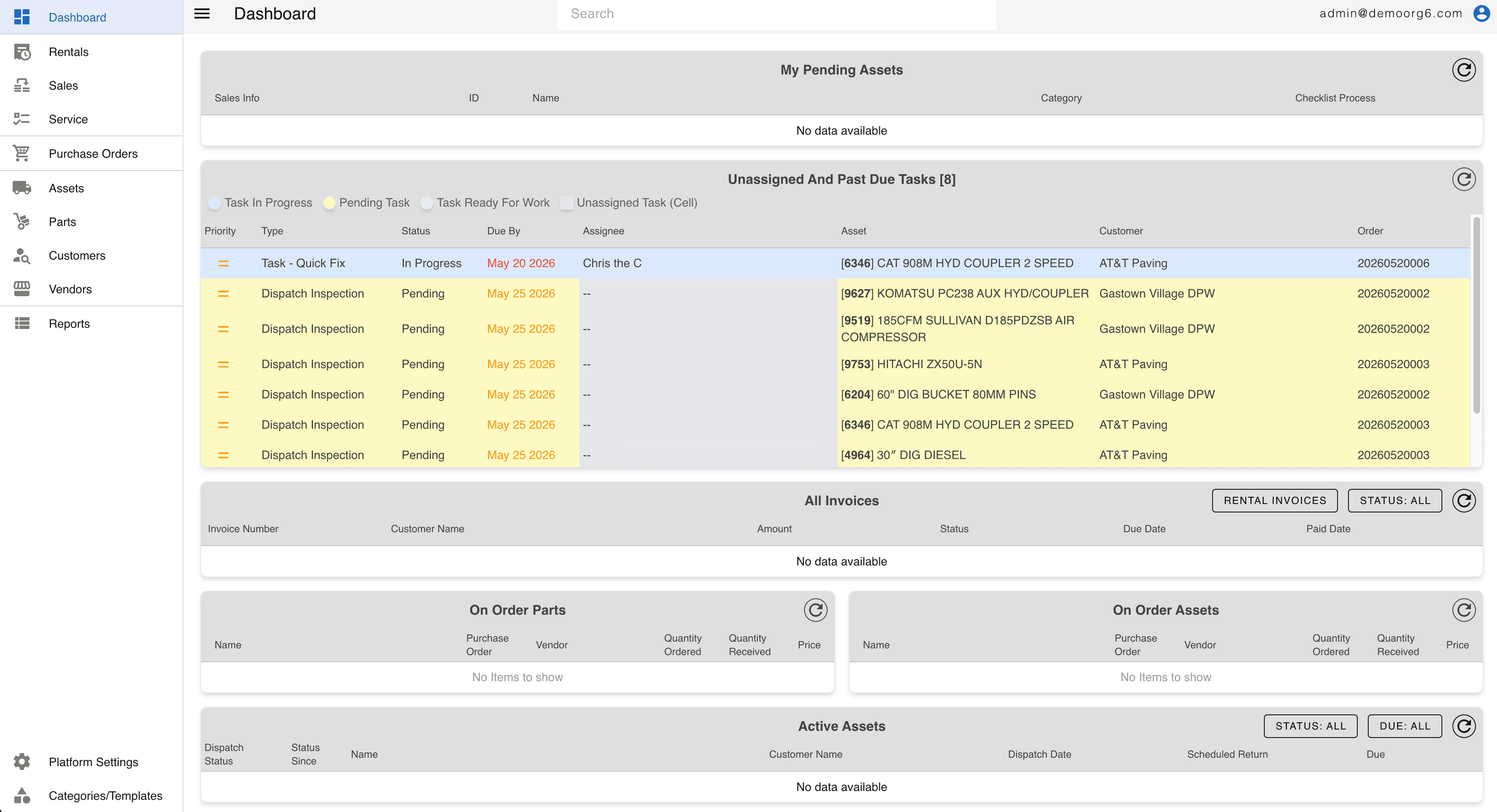
Past-due work orders, unassigned dispatches, open invoices, parts on order, active assets — every piece of work that touches today is on the screen you open first.
Three-level category tree
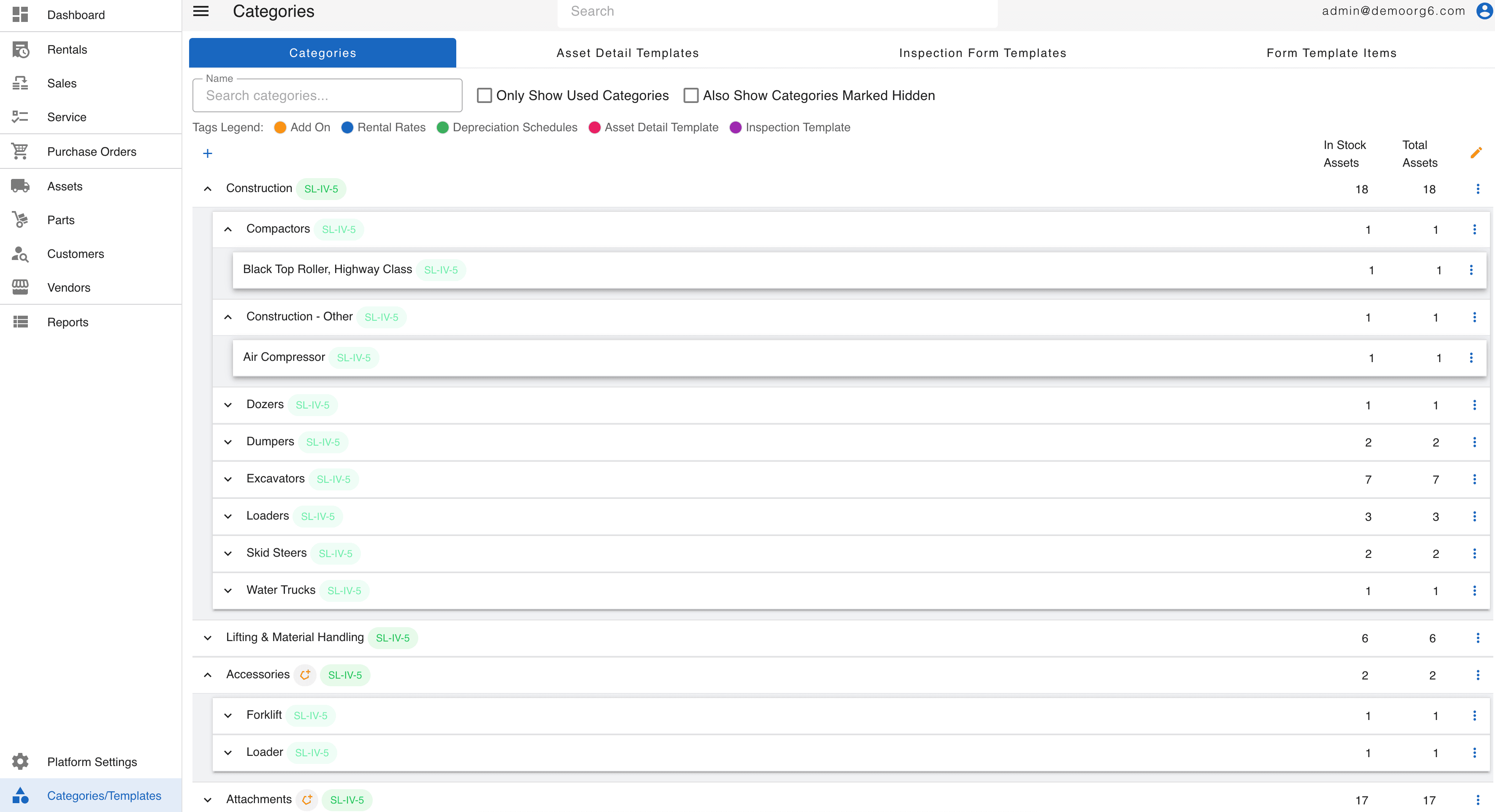
Super Category, Category, and Sub-Category, with inheritable attributes per level. Add-ons, rental rates, depreciation schedules, asset detail templates, inspection templates — all roll up cleanly. Not a flat list with tags.
Per-asset everything
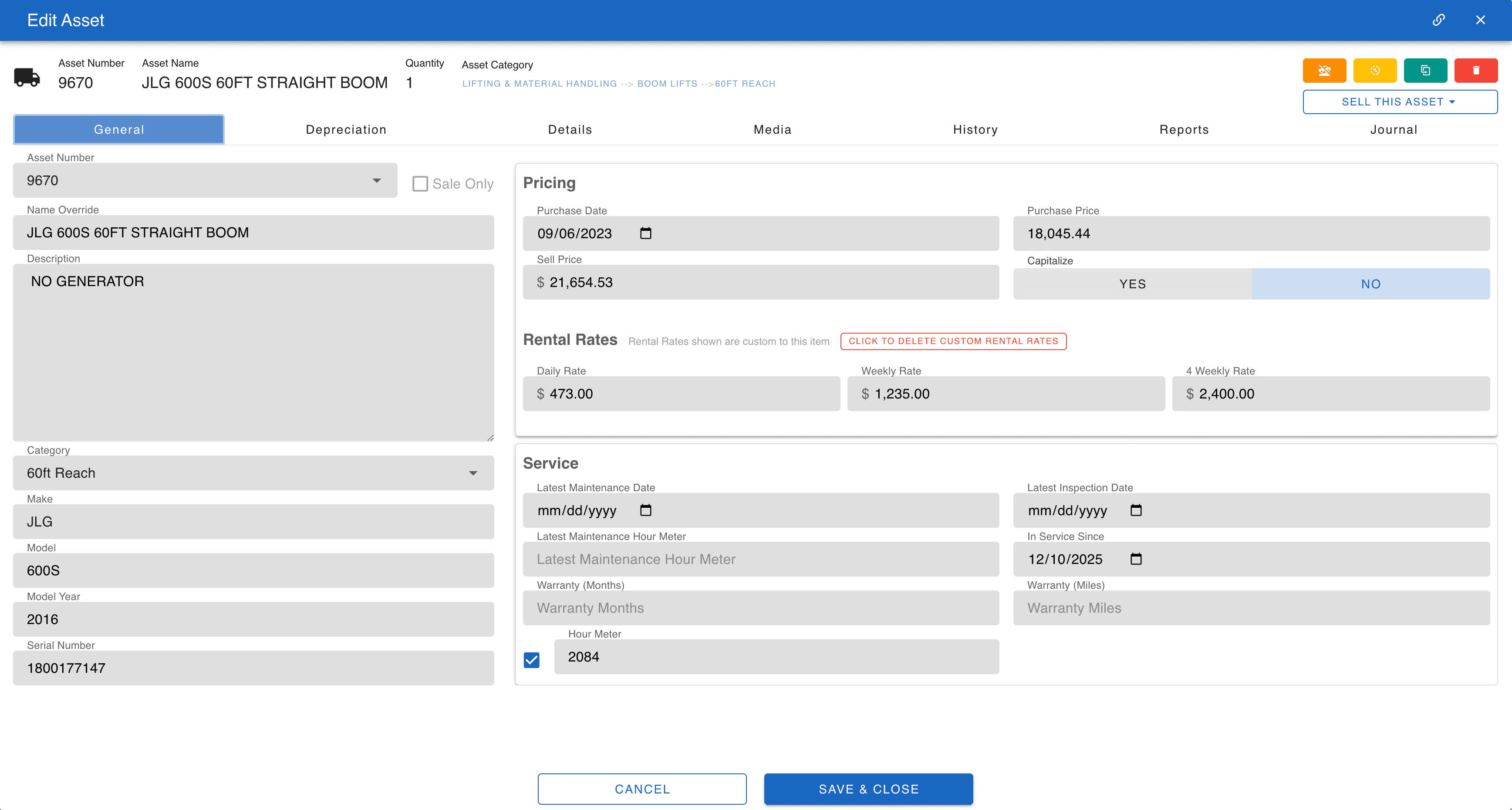
Daily, weekly, and 4-weekly rental rates; purchase and sale prices; latest maintenance and inspection dates — all on the asset record. Override the category default per asset when the rate needs to flex.
Reservations
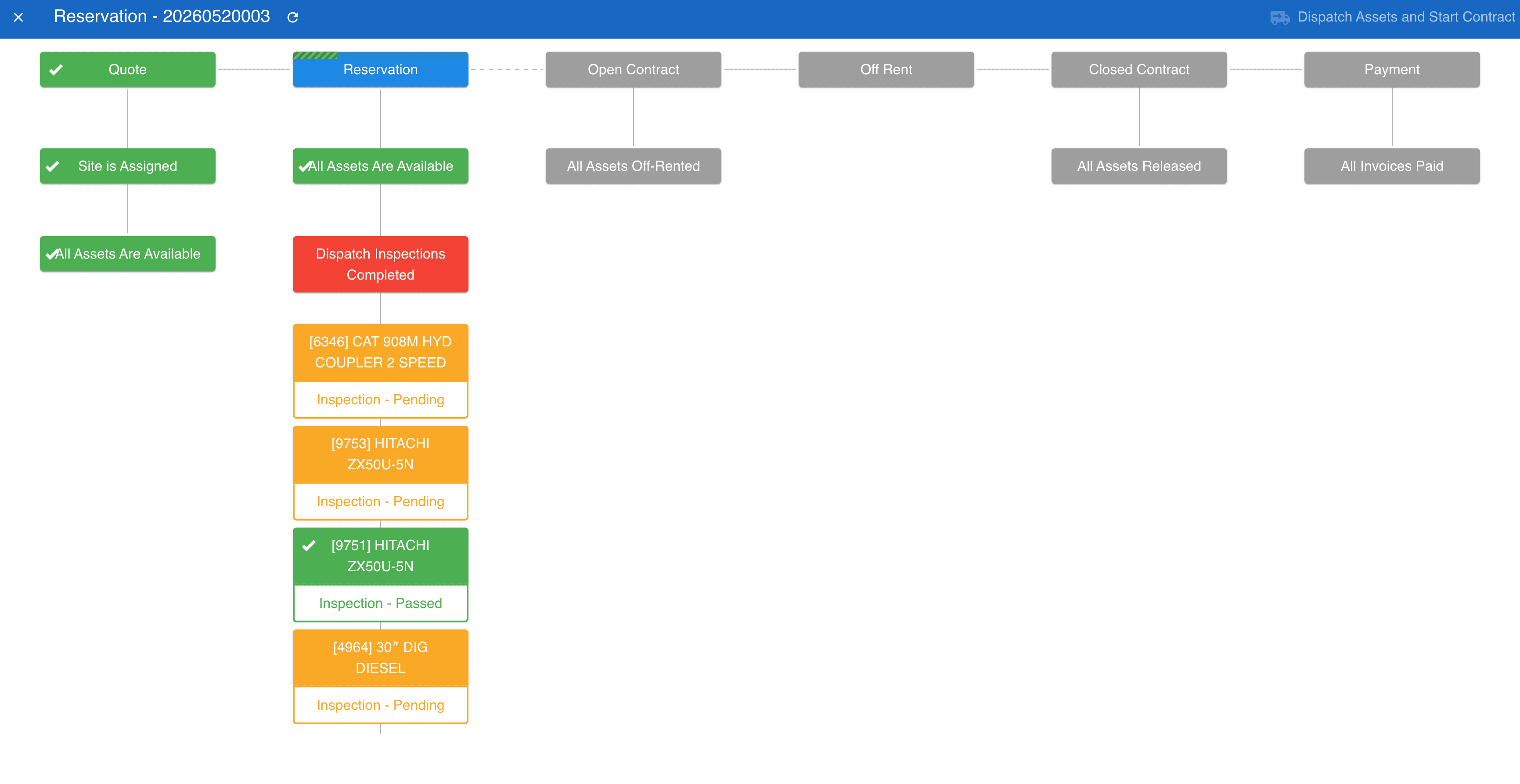
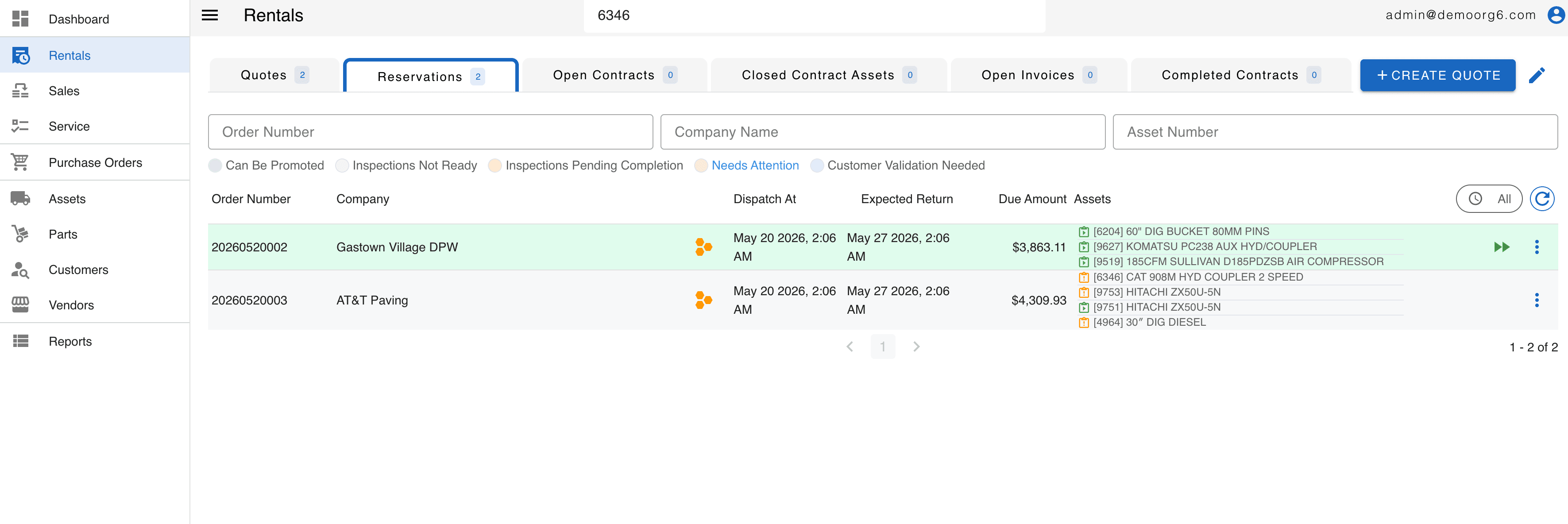
Quote → Reservation → Open Contract → Off Rent → Closed Contract → Payment. An e-signature can be required before the reservation or before the open contract — the invite goes out from the quote. Credit exposure (open A/R plus uninvoiced open orders plus this quote) is checked against the customer's limit before a quote becomes a reservation: allow, warn, or block, with an override permission for the people you trust with it. Status badges flag what needs attention: inspections, validations, signatures. The yard sees what is coming in; the office sees what is billing out.
Service work
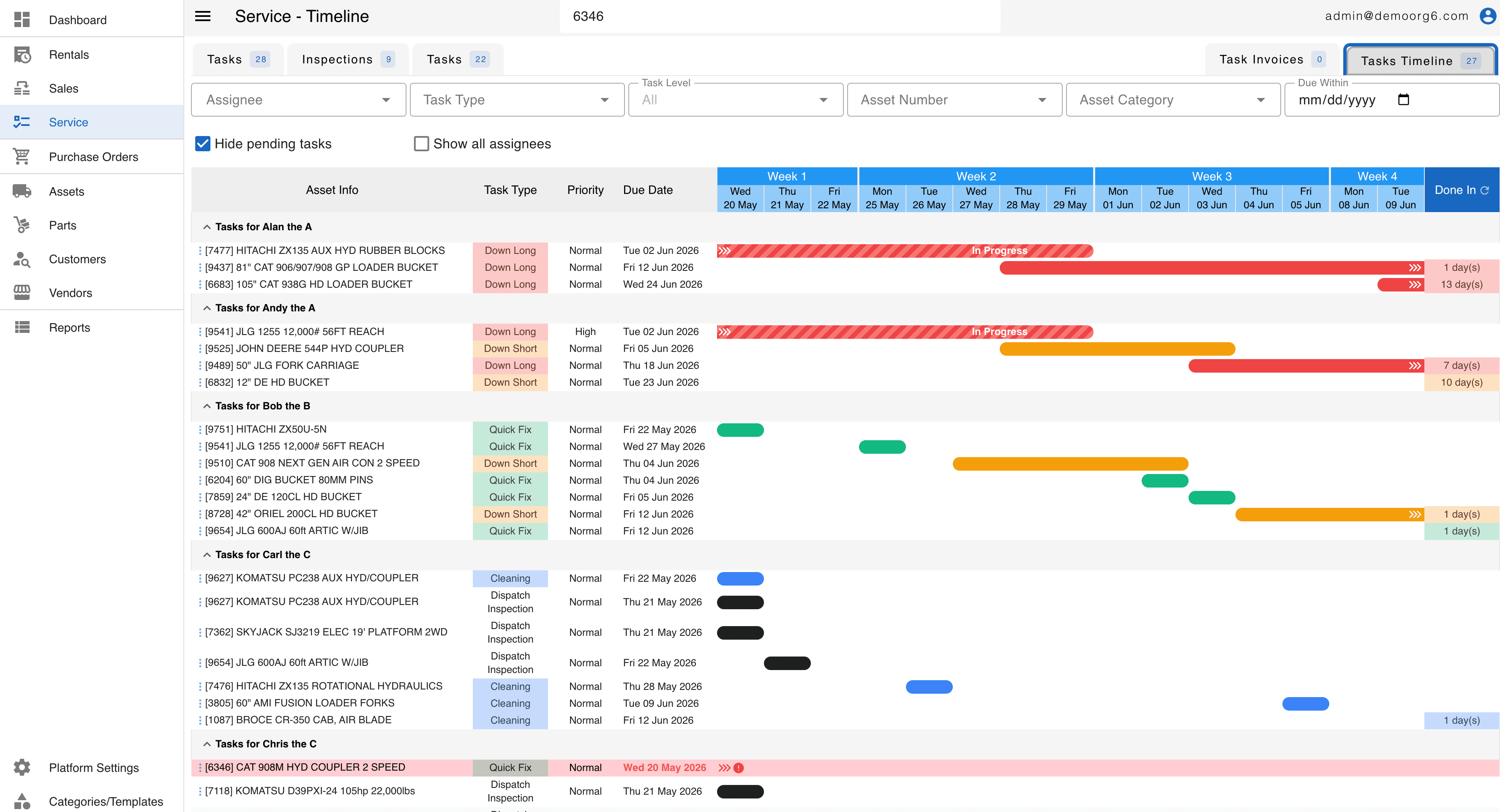
Every work order has a priority, a due date, an assignee, and a status. Filter by crew, by asset, by status — or save the filter as a custom tab. View as a list, or pivot to the Gantt timeline to see all current and upcoming work.
Reporting
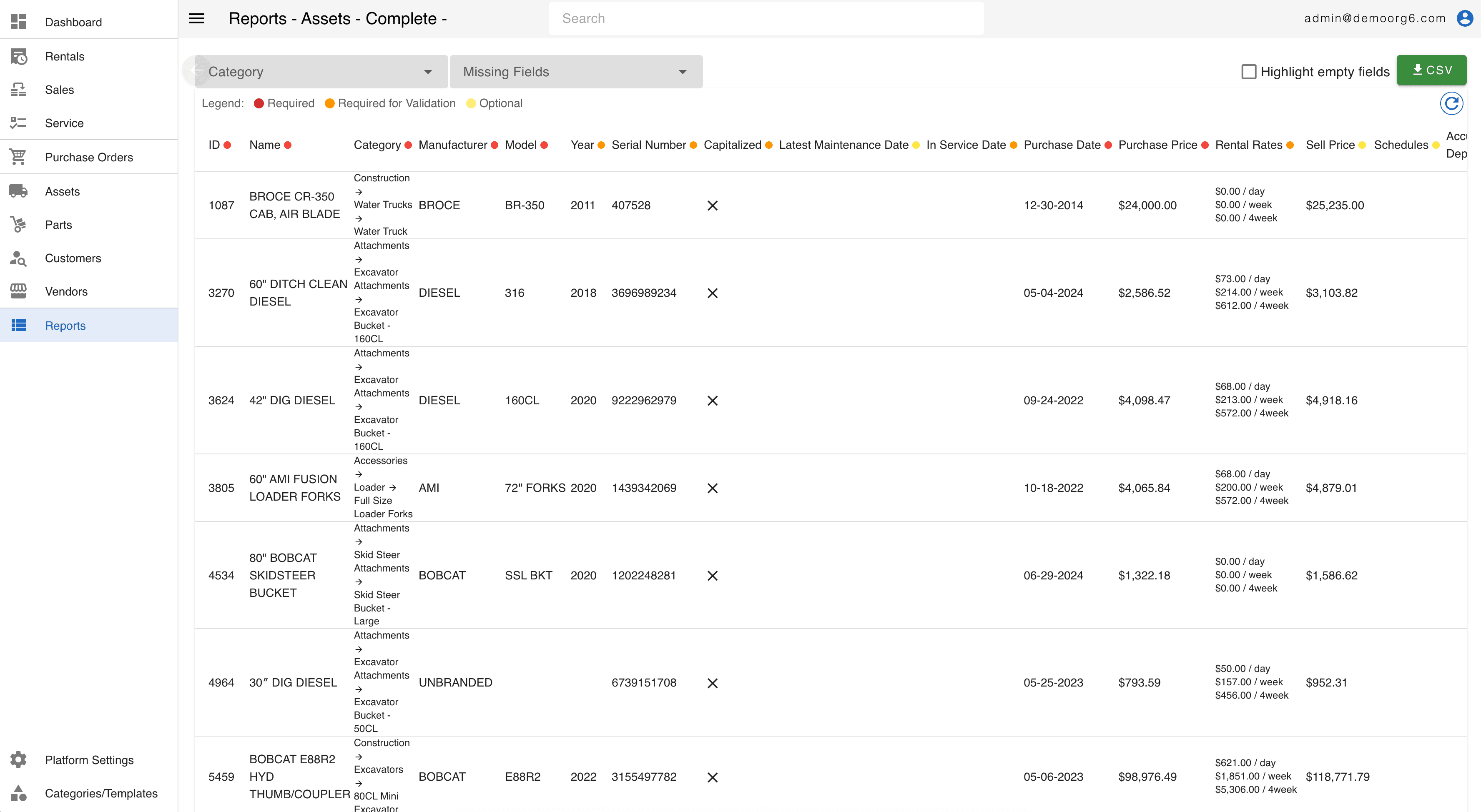
GAAP depreciation runs in real-time — not at month-end close. Asset reports show what required or validated fields are missing, with CSV export for the CFO. The numbers match what is on the asset record because they are the same numbers.
AI
Hour-meter recognition in the Inspect app. Damage analysis between dispatch and off-rent photos. Per-asset rate recommendations with sources shown. Natural-language search across the platform. Fleet demand prediction from historical usage. We invest in AI for the operator.
What we already ship
Rental rates that flex with hours, miles, or seasonal demand — already shipping, no waiting list.
Super Category, Category, and Sub-Category, with inheritable asset attributes. Not a non-relational blob like the legacy stack.
Purchase price, maintenance, interest, and disposal in a single per-asset margin — not just revenue.
Depreciation runs in realtime, not just at the end of the month. Your CFO will notice.
Real customers running production fleets today. Proven isolation, predictable upgrades.
Send an e-sign invite from the quote and require the signature at the step you choose. Credit exposure is checked before a quote becomes a reservation — allow, warn, or block.
Card on file, cash, check, ACH, or wire — with reference numbers, clearing dates, partial and split payments, and overpayments credited to the customer's balance.
Live location, device hour meter, odometer, and utilization from Samsara today. The telematics record is provider-agnostic, so other GPS feeds land in the same place.
DOS-era cores, generic ERPs with rental modules bolted on, no real cloud story. We picked up where they stopped trying.
Proof in production
Anonymized while customer permission is finalized.